reweave for early childhood

The years a child's world is first taking shape.

Wordless films of real people from all over the world, for ages 0 to 5. No reading needed. Led by the grownup who chooses what a young child sees. Free to start.

A young child decides who counts as "us" long before they can read.

Every child starts with a small world. In the first months of life, babies already look longer at unfamiliar faces and lean toward the ones they know. By the preschool years, children have quietly sorted the world into people who feel like "us" and people who feel like "them," well before they start kindergarten. Researchers who study how children grow call these early years a starting point, the moment a person's sense of who belongs first takes shape.

Children are not born thinking this way. They are born watching. They learn from the faces around them, from who their grownups light up for and who they walk past, from a hundred small signals no one says out loud. A child's picture of the world is built from what the world shows them. And for most young children, what the world shows them is very few kinds of people.

The same research points to something hopeful, and refreshingly simple. The thing that keeps a small world from staying small is meeting a lot of real people, early and often. When a young child gives real attention to a face, a pair of working hands, a home, a whole day unlike their own, "them" slowly becomes another "us." The years a child's view of people is forming are exactly the years to make that view a wide one.

That is what reweave is for. Not a screen to hand a toddler, and not a lecture about being kind. A few quiet minutes where a grownup and a young child watch a real person live a real day, and talk about what they notice. Curiosity, practiced early, before quick judgments have a chance to harden into something a child stops questioning.

This draws on long-standing developmental research into how young children come to understand people, and on a tradition of early childhood thinkers who have written about windows and mirrors: the idea that every child needs to see both their own world and other worlds. reweave is a tool in service of that work, in our own plain words. We steer clear of the political fights over what to call it. The point is older and simpler than any of that.

A child who has truly met someone from across the world has a harder time, later, believing they are strangers.

why this works for the youngest learners

Made for grownups and little ones, together.

No reading barrier. No lecture about differences. Just real people, real attention, and a conversation that a three-year-old and a five-year-old can each meet in their own way.

👶

No words, no reading.

The films have no narration and no text. A two-year-old understands as much as a five-year-old, because the language is faces, hands, and daily life.

🌍

Real people, not cartoons.

A child sees an actual person in Ecuador, Indonesia, or India, living a real day. Real faces widen a small world in a way no illustration can.

🫶

A grownup leads.

This is not a screen to hand over. You watch together, point, and name what you see. The whole value is in the few minutes you share.

🌱

Short and joyful.

A film is a few minutes. With little ones, stop while it is still delightful. There is nothing to finish and no right length.

real people a young child can meet

Start with a face, end with a question.

Four real people from the library, and a simple thing you might say to a four-year-old while you watch together.
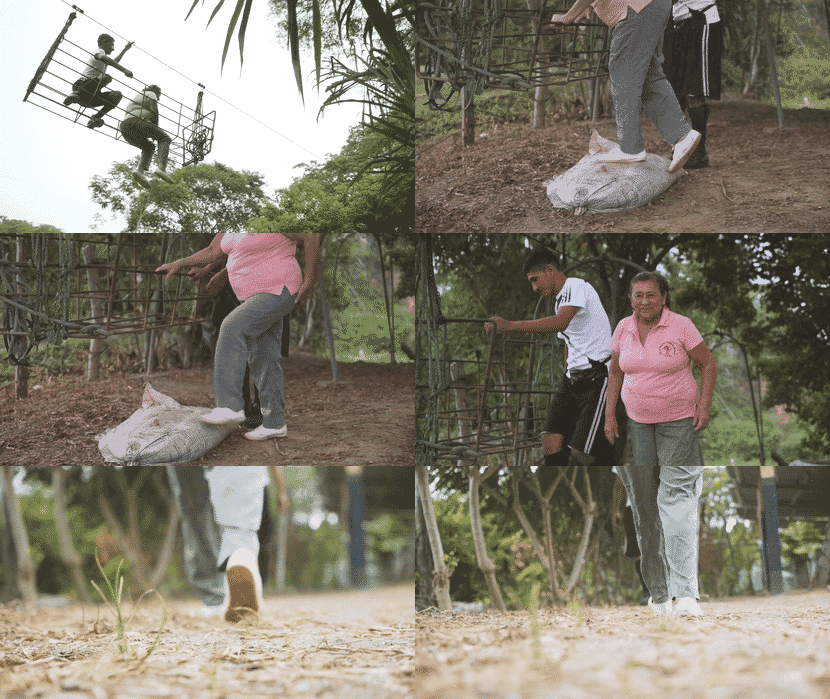
Norma
Food and family Norma, Ecuador

A mother who grows bananas.

Norma sorts and carries bananas on her family farm. A young child can count them, name the colors, and watch how she works with her hands.

"Look how many bananas. Can we count them? Where do you think they go next?"
Meet Norma →
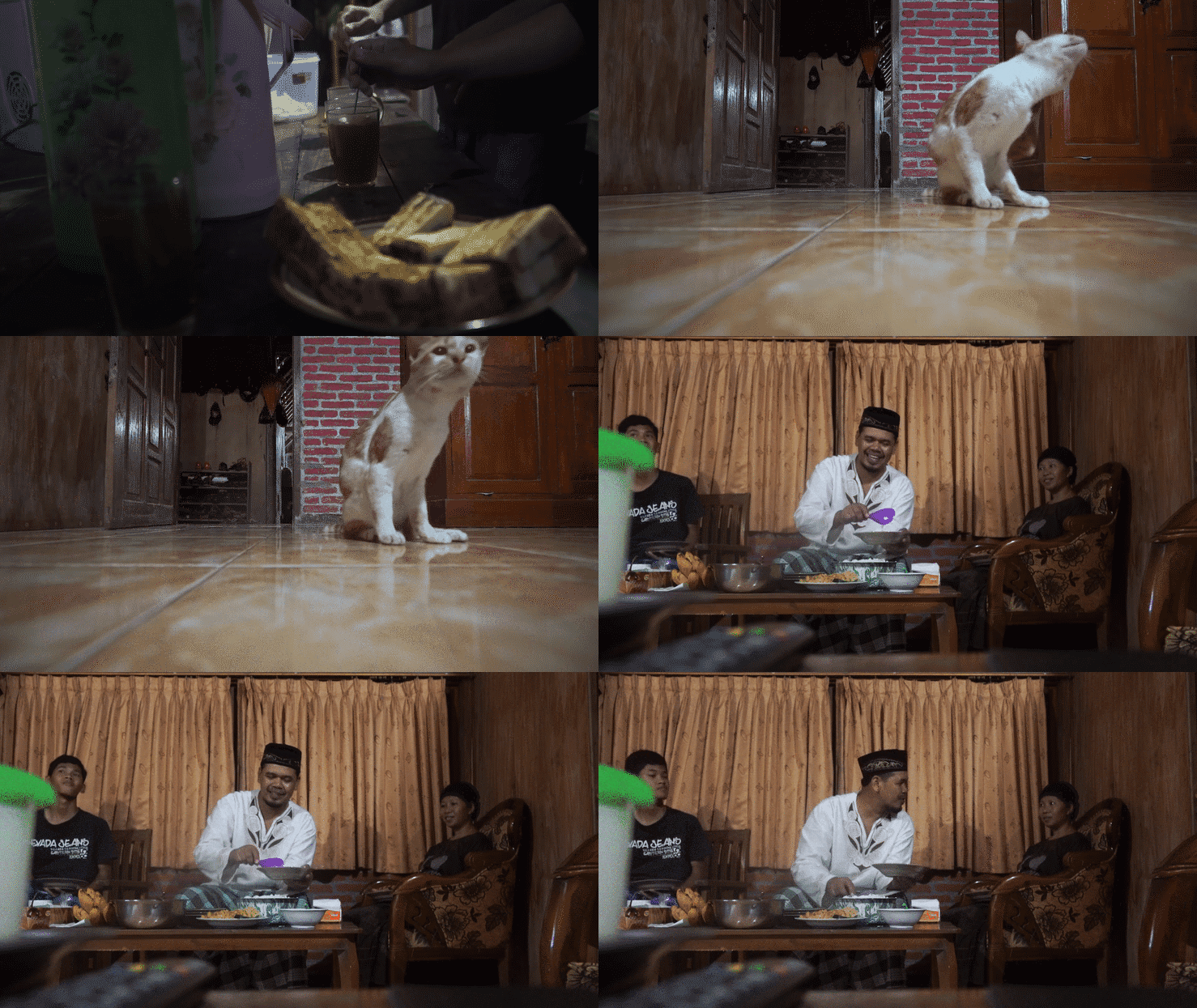
Pak Paryono
Work and place Pak Paryono, Indonesia

A man who climbs tall trees.

Pak Paryono climbs palm trees to gather sugar. Watch his hands and feet. Talk about being brave, being careful, and working high up.

"Look how high he climbs. Do you think that feels scary or fun? How is he so careful?"
Meet Pak Paryono →
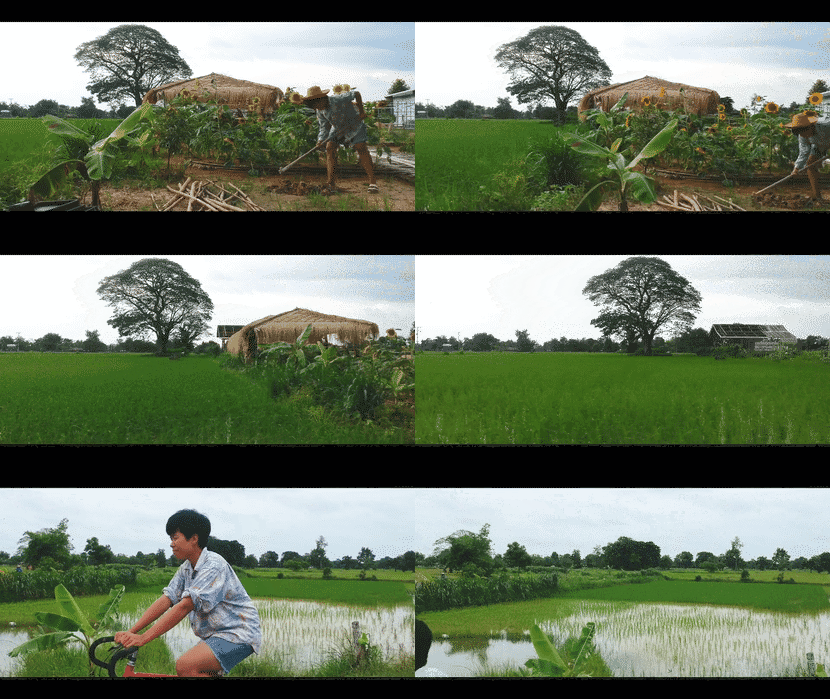
Areeya
Growing things Areeya, Thailand

Someone who grows good food.

Areeya tends plants and cares for the land. A young child can spot the green growing things and talk about where their own food comes from.

"She grows food in the ground. What food do you love? Where do you think it comes from?"
Meet Areeya →
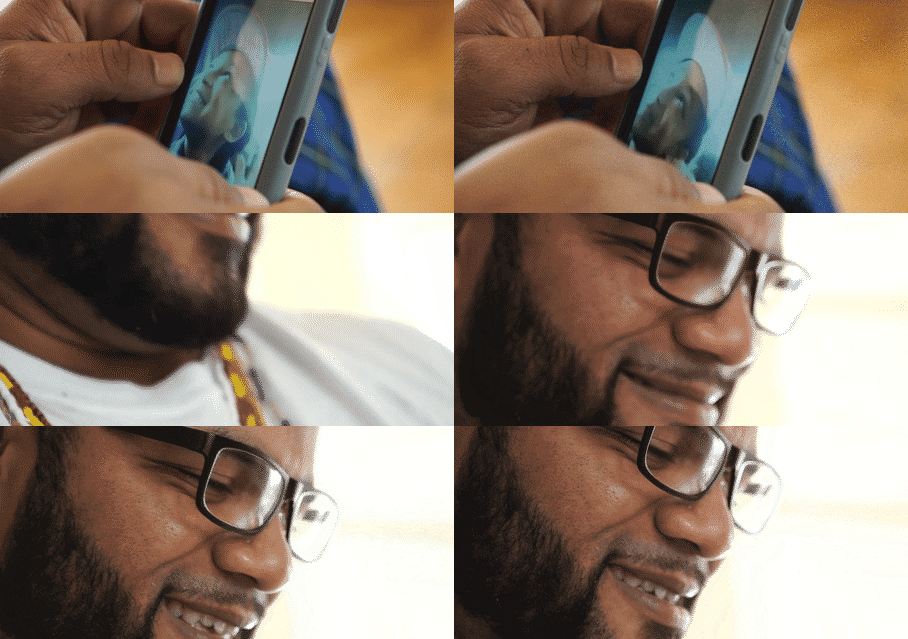
Divine
Imagination Divine, USA

A person full of imagination.

Divine makes and dreams and builds. Watch together and wonder out loud about what he is making, and what your child would make.

"What do you think he is making? What would you build if you could build anything?"
Meet Divine →
how a few minutes goes

Watch. Notice. Wonder.

No prep, no script. Three gentle moves, and the child does most of the work.

1

Watch together.

Pick a person and play their short wordless film. Sit close. Let the child point and react. You do not need to explain anything.

2

Notice out loud.

Name what you both see. "Look at her hands." "Those trees are so tall." Noticing is the whole skill, and little ones are great at it.

3

Wonder together.

Ask one easy question and follow where it goes. "I wonder what that tastes like." There are no wrong answers, and no need to finish.

"

My daughter watched the banana farm and asked if the lady was someone's mom. We talked about it for the whole drive home. She is three.

a parent of a preschooler
early childhood questions

A few honest answers.

Is reweave meant for the child alone, or for the grownup and child together?
Together, always. reweave is a resource for the adult who chooses what a young child sees. A parent, an early childhood educator, or a caregiver watches a wordless film alongside the child and talks about it. This is not a screen to hand a toddler. It is a shared few minutes that opens a conversation.
Why do the early years matter for how children come to see other people?
Every child starts with a small world. Babies already lean toward familiar faces in the first year, and by preschool children have quietly sorted people into us and them, before they start kindergarten. The same research points to something hopeful: meeting a wide range of real people, early and often, keeps that small world from staying small. The years a child's view of people is forming are the years to make it a wide one.
Do the films work for children who cannot read yet?
Yes. The films are wordless, with no narration and no text on screen, so a two-year-old and a five-year-old can both watch and understand. The reading happens only in your voice, when you choose to read the person's story aloud.
How is this different from picture books about other places and people?
Picture books are wonderful, and the windows-and-mirrors idea behind them is part of why reweave exists: every child needs to see both their own world and other worlds. The difference is that these are real people, filmed in their real days, in their own places. A child sees an actual person in Indonesia climbing a real palm tree, not an illustration of one. Real faces, real hands, real homes.
How long is a session with a young child?
A film runs a few minutes. With the youngest children, that may be the whole session. Watch, point, name what you see, and stop while it is still joyful. There is no right length and nothing to finish.
Does it cost anything to use reweave with young children?
Every film is free to watch, forever, on a free account. Spark adds the written stories, useful when you want to read a person's words aloud. Pro adds lesson weaving, useful for an early childhood educator planning a circle-time conversation. See pricing.
Can early childhood educators use reweave in a classroom or center?
Yes. The films suit circle time, small-group time, and family-engagement nights. Educators can weave a short conversation plan for a chosen person, and a whole center or team can share their best plans through a team tapestry. For centers and districts, see reweave for teams.
Can the lesson weaver make something for ages 3 to 5?
Yes. Set the age to your youngest learners and the weaver builds a short, talk-based plan around a real person, with no reading or writing for the child. It stays concrete: point, count, name what you see, and treat one film plus a few minutes of wondering as a whole session. A thoughtful first draft for you to shape. Try the weaver.
see it for yourself

Try the real thing, in a new tab.

These open in a new window so you can come back here. No account needed to watch a film.

start this week

One real person. A few quiet minutes.

Pick a story. Watch it with your little one. See what they notice. Widening a child's world starts with a single face.

Find a story → Homeschooling too?